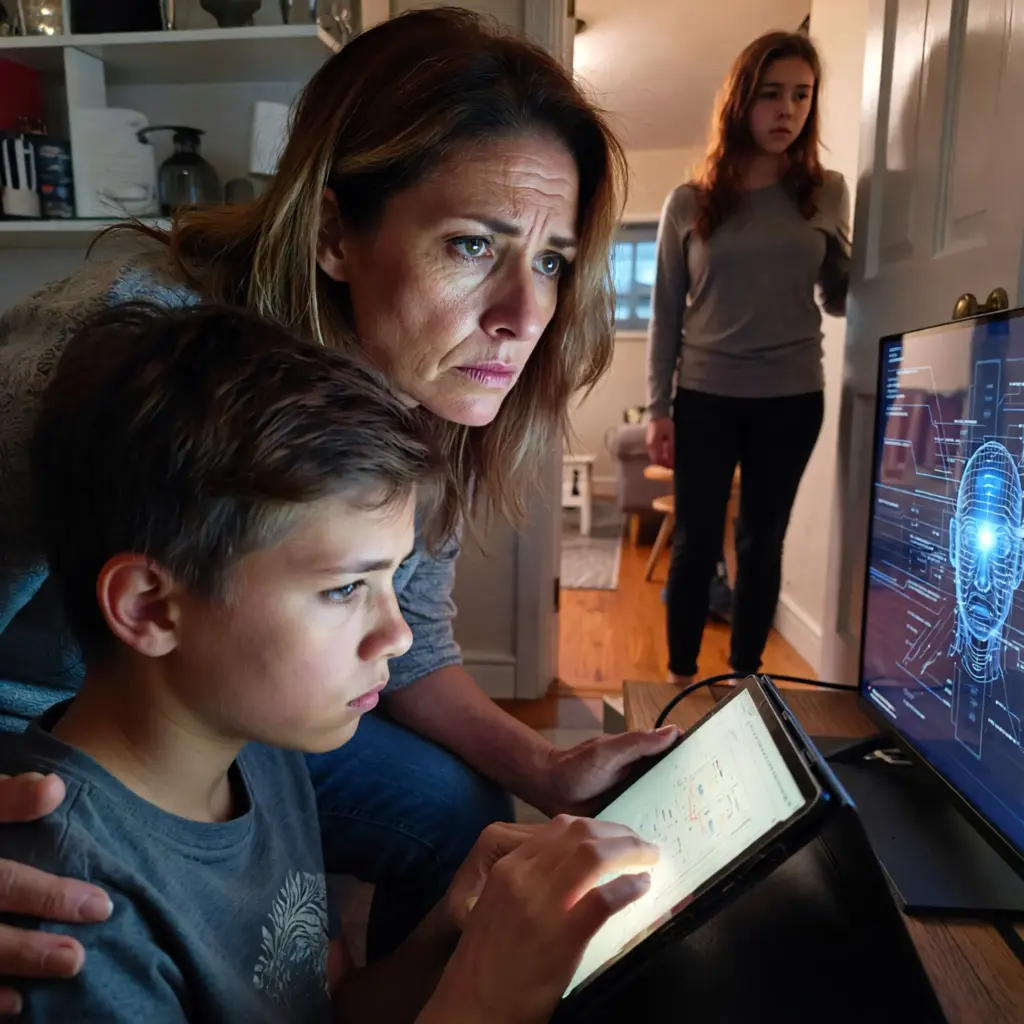
“Mum, my teacher uses a robot to help make our worksheets!”
If your child has mentioned AI at school, you’re probably wondering what’s actually happening in their classroom, and whether you should be concerned or excited.
As AI becomes increasingly common in Australian schools, parents deserve clear, honest information about how these tools are being used to enhance their child’s education. Here’s everything you need to know.
What AI in Education Actually Looks Like
Forget the Hollywood images of robots teaching classes. Real AI in Australian classrooms is far more practical and teacher-controlled:
Lesson Planning: Teachers use AI to create age-appropriate activities faster, allowing more time for individual student support.
Personalised Learning: AI helps identify when your child needs extra practice or is ready for more challenging work.
Instant Feedback: Students receive immediate responses to their work, helping them learn from mistakes quickly rather than waiting days for marked assignments.
Resource Creation: Teachers generate custom worksheets, reading materials, and activities tailored to your child’s specific learning needs.
The Safety Question Every Parent Asks
“Is my child’s data safe?”
This is the right question to ask!
Here’s what responsible AI implementation looks like:
Data Protection Standards:
- Student work remains within secure, education-specific platforms
- No personal information is shared with commercial AI companies
- All AI tools comply with Australian privacy legislation
- Schools maintain full control over student data
What Good Schools Do:
- Clearly communicate which AI tools are being used
- Provide opt-out options for concerned families
- Regular privacy audits of all AI platforms
- Staff training on data protection protocols
Red flags to watch for:
- Teachers using consumer AI tools (like ChatGPT) with student names or personal information (even if names are removed)
- Unclear policies about AI usage
- No communication to parents about AI integration
How AI Actually Helps Your Child Learn Better
Based on 12 months of classroom observations, here’s how AI enhances learning outcomes:
Immediate Learning Support
Traditional scenario: Your child gets stuck on a maths problem, raises their hand, waits 5 minutes while the teacher helps other students, then receives brief assistance before the teacher moves on.
AI-enhanced scenario: Your child receives instant, step-by-step guidance through the problem, can ask follow-up questions, and gets additional practice problems at the right difficulty level.
Personalised Reading Development
Traditional approach: Whole class reads the same book regardless of individual reading levels.
AI approach: Each student receives texts matched to their reading level and interests, with vocabulary support and comprehension questions tailored to their needs.
Creative Writing Enhancement
Instead of replacing creativity, AI helps students:
- Brainstorm ideas when they’re stuck
- Check grammar and spelling in real-time
- Receive suggestions for improving sentence structure
- Build confidence through immediate, constructive feedback
Questions to Ask Your Child’s School
Engaged parents drive better AI implementation. Here are specific questions to ask at your next parent-teacher conference:
About Safety:
- “Which AI tools are used in my child’s classroom?”
- “How is my child’s data protected?”
- “Can I see examples of AI-generated content used with students?”
About Educational Value:
- “How does AI support my child’s specific learning needs?”
- “What skills is my child developing through AI interaction?”
- “How do you ensure AI enhances rather than replaces critical thinking?”
About Balance:
- “How much classroom time involves AI tools?”
- “What learning activities remain completely human-led?”
- “How are you teaching responsible AI usage?”
Supporting AI Learning at Home
Your child will encounter AI throughout their life. Schools using AI responsibly are actually preparing students for this reality. Here’s how to support this learning at home:
Encourage Critical Thinking:
- Ask: “How did the AI help you with that assignment?”
- Discuss: “What could you do that AI cannot?”
- Explore: “When should you use AI, and when shouldn’t you?”
- Test: “How do you know if you have learned something, or is it just AI doing your work?”
Model Responsible Usage:
- Show your child how you use AI tools (like GPS navigation or voice assistants) thoughtfully
- Discuss the importance of checking AI-generated information
- Demonstrate that AI is a tool to enhance human capability, not replace it
Stay Curious Together:
- Ask your child to teach you about AI tools they’re using at school
- Explore age-appropriate AI applications together
- Celebrate creativity and original thinking
The Skills Your Child is Really Learning
When schools implement AI thoughtfully, students develop crucial 21st-century skills:
Digital Literacy: Understanding how to interact with AI systems effectively and safely
Critical Evaluation: Learning to assess AI-generated content for accuracy and appropriateness
Creative Collaboration: Using AI as a brainstorming partner while maintaining original thinking
Ethical Reasoning: Understanding when AI use is appropriate and when human judgement is essential
Data Privacy: Knowing what personal information you should never share with AI cloud platforms
Red Flags vs Green Flags
🚩 Red Flags (Concerns to raise with the school):
- Students using AI to complete entire assignments without learning
- No clear policies about AI usage
- Teachers unable to explain how AI tools work
- AI replacing human interaction and feedback
✅ Green Flags (Signs of excellent AI integration):
- Clear communication about AI usage and policies
- Students can explain how AI helps their learning
- Teachers use AI to create more personalised learning experiences
- Balance between AI-enhanced and traditional learning activities
The Future Your Child is Preparing For
By 2035, your child will enter a workforce where AI collaboration is standard. Schools using AI responsibly today are giving students a crucial advantage, not just technical skills, but the wisdom to use powerful tools thoughtfully and ethically.
The goal isn’t to make students dependent on AI, but to help them become confident, critical users who can harness AI’s power while maintaining their uniquely human capabilities: creativity, empathy, critical thinking, and ethical reasoning.
Want to learn more about AI in your child’s school?
- Attend our upcoming “Parents and AI Education” information session or download our free guide “10 Questions Every Parent Should Ask About AI in Schools.”
- Visit RocketEducation.ai for resources designed specifically for families navigating AI in education.